
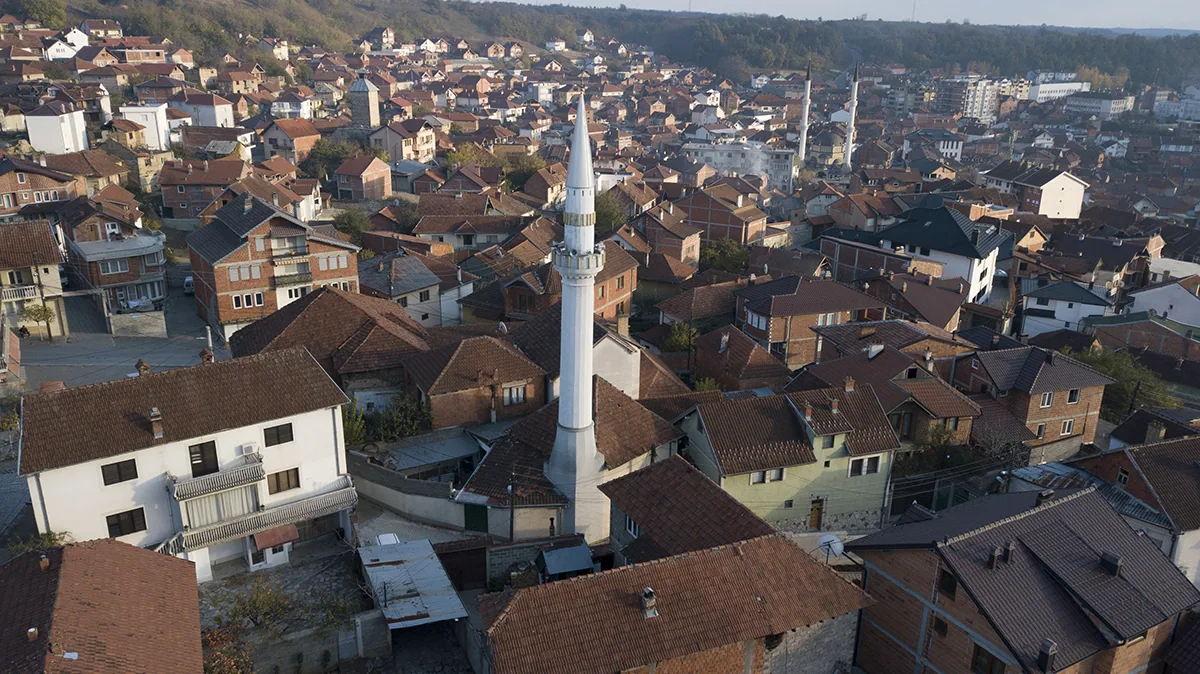
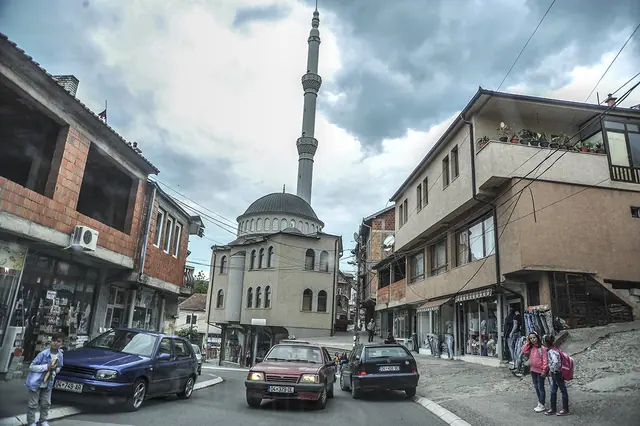
The Sokoli Mosque, with its front facade oriented to the west, is located in the town of Rahovec, on Bekim Sylka Street near Republika Square. In the vicinity of the mosque are: the Tower House (Kulla) of Hajrullah Çanta, the old fountain in Republika Square, the Kasumi Mosque, the Clock Tower (Sahat Kulla), old traditional houses, etc.
According to the residents of the town of Rahovec, the Sokoli Mosque was built at the beginning of the 19th century, in 1824, before the Kasumi Mosque, by Sylë Sokoli with the support of the local residents.
From an architectural point of view, the mosque was built on sloping terrain, with a rectangular floor plan, and consists of the prayer hall: quadrangular in shape with dimensions of 732×738 cm and a height of 695 cm, and the hayat (porch), which is located within the prayer hall and covered with a flat roof. The hayat space, with an irregular floor plan, dimensions of 739×205 cm and a height of 351 cm, was built later and serves as the entrance to the prayer hall (mosque) from the western side of the mosque.
In the prayer hall there are the Mihrab, set into the southern wall of the mosque, the Minbar, and the Kursi, made of wood. Inside the mosque, namely in the dome, there are mural paintings with geometric and floral decorations. The minaret of the mosque, placed on the western side of the mosque, has a polygonal floor plan, with one sherefe (balcony), and access is provided through an opening in the wall, located at a certain height above the level of the prayer hall.
Within the mosque courtyard there are the following ancillary buildings: ablution taps, the mosque's ancillary space, sanitary facilities and a new ground-plus-one annex building serving the mosque. The mosque courtyard is paved with crushed stone.
The foundations of the mosque are presumed to be of stone, while the walls of the prayer hall, 60 cm thick, are of fired bricks bound with cement mortar. The minaret of the mosque is built of tuff stone (siga), plastered on the outside with cement mortar, and was repaired after 2000 as a result of damage from shells during the last war in Kosovo in 1998-1999.
The roof of the mosque is hipped (four-sided), covered with flat tiles, while the minaret's cover is made of sheet metal.
Immovable furnishings: the Mihrab, set into the southern wall of the mosque; the Minbar, made of wood; the Kursi, made of wood; mural paintings with geometric and floral decorations in the dome;
Movable furnishings: a large wooden clock; prayer beads (tespih);
The mosque has historical value because during the 1990s of the 20th century it served as a secondary school for pupils of the Municipality of Rahovec; during nationwide demonstrations and protests it served for demonstration gatherings and shelter for them; and during the last war in Kosovo in 1998-99 it served as a depot for food and clothing, for supplying the KLA fighters.
Throughout this whole time the mosque has served, and still serves, for Islamic worship for the residents of Rahovec.
Nearby
Attractions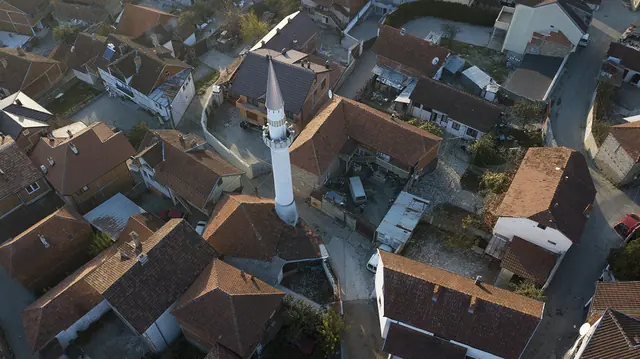
The Kasumi Mosque
Xhamia e Kasumit
The Kasumi Mosque, with its front facade oriented to the north, is located in the town of Rahovec, on Bekim…
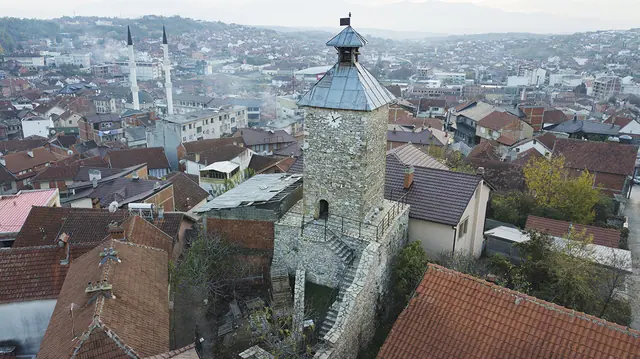
Sahat Kulla (Clock Tower) - Rahovec
Sahat Kulla - Rahovec
Sahat Kulla (the Clock Tower) is located in the Gradina neighbourhood, in the old centre of Rahovec. It was…
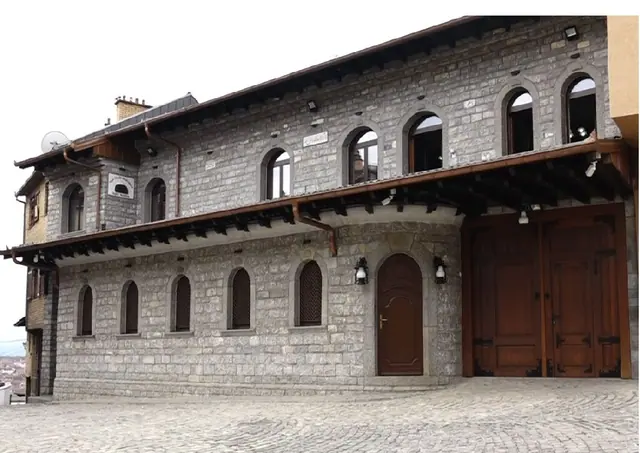
The Tekke of Sheikh Ilaz
Teqeja e Shejh Ilazit
The tekke of the Rifai order dates from the 19th century and, together with the Kadiri Order, is among the…
The Kadiri Mosque
Xhamia e Kadirëve
The Kadiri Mosque in Rahovec was first built in 1750. Because the former mosque had been built with poor…