
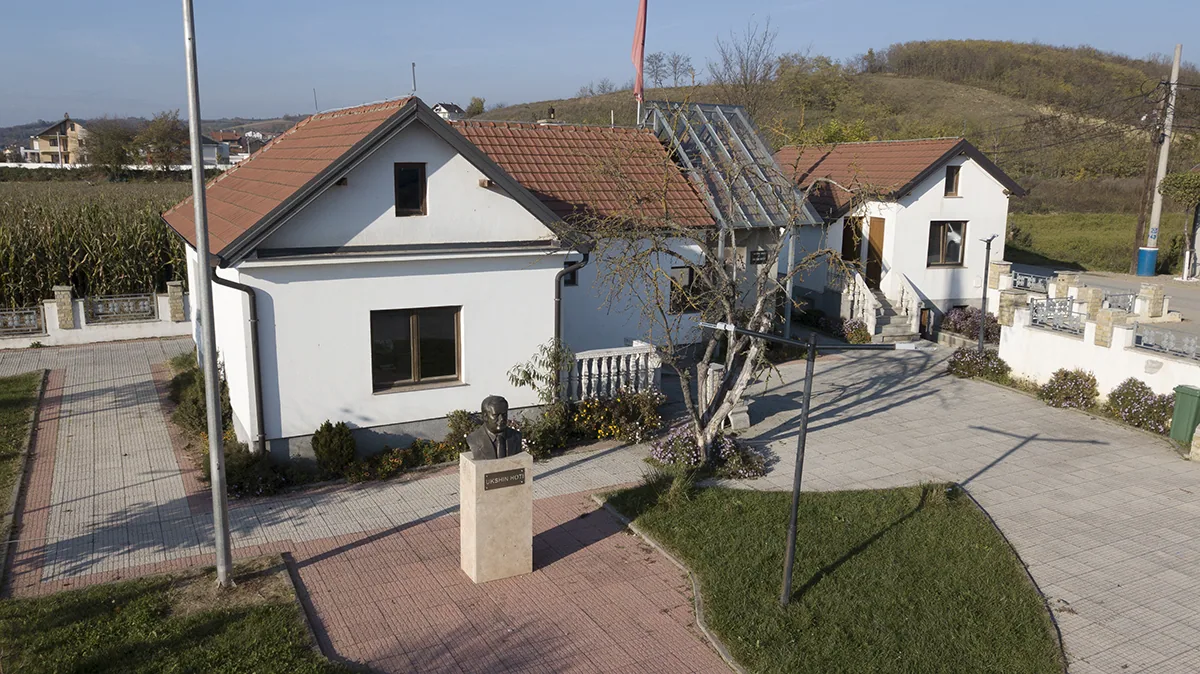
The “Ukshin Hoti” House Museum is located about 770 m to the right (east) of the Prizren-Gjakova main road, in the village of Krushë e Madhe, Municipality of Rahovec.
The house was built in 1987 in the rural architecture of the time. It is L-shaped, raised 60 cm above ground level, with the entrance hall and bathroom in the centre and a room on each side. The building was constructed with load-bearing walls of clay blocks and continuous mortar as the binding material. The columns were of reinforced concrete, while the slab was built with the semi-prefabricated “fert” system. During the last war (1999) the building was burned down completely, and it was rebuilt and adapted in 2013.
The reconstruction and adaptation of the building into a museum was carried out by the Municipality of Rahovec, preserving the original form, size, volume and architecture it had before 1999. During the reconstruction of the house, one part of it was preserved in the condition damaged by the 1999 war, and it is now part of the history of the Hoti family. Thus, since 2013 the house has functioned as a museum presenting various materials and items connected with the personality of Ukshin Hoti. Part of the museum is also the original part of the house damaged during the 1999 war. The reconstruction of the house was done with similar building materials, namely clay blocks (walls) and reinforced concrete (foundations, columns and beams). It was plastered with lime mortar inside and outside, while the floors were laid with laminate except for the bathroom, which has ceramic tiles. The original part of the house on the eastern side has been preserved in its damaged state, where the broken blocks, the damaged plaster and the plank floor can be seen.
The museum house of Ukshin Hoti contains important historical and social values for the Albanian people in general and for the state of Kosovo in particular. Considering the personality of Ukshin Hoti as an important figure of the recent history of Kosovo, it is of national interest to present comprehensively his activity, the conditions and circumstances in which he lived and worked, as well as the objects and artefacts that are directly or indirectly linked to his personality.
The “Ukshin Hoti” house-museum, with two single-storey buildings adapted with exhibition spaces and a courtyard of 40 ares, constitutes the historical centre of collective memory and of human sacrifice for freedom and national rights. This centre carries universal historical and social values and is classified as cultural heritage of national importance, which must be preserved, protected and cultivated by present and future generations.
In the interior, several display cases and shelves have been placed, as well as photographs hung on the walls, presenting the life and activity of Ukshin Hoti. The transformation of the house into a museum has some shortcomings, and the organisation and presentation of the exhibits and the environment as a whole needed to be corrected or re-conceptualised.
The museum has a rather large courtyard, part of which is paved with concrete slabs, while in front of the building stands the bust of Ukshin Hoti.
Nearby
Attractions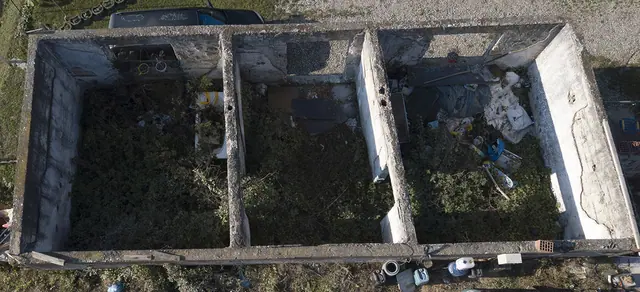
The House - Museum of the Massacre in Krushë e Madhe
Shtëpia - Muze e Masakrës në Krushë të Madhe
At this location, on 26 March 1999, 46 citizens of Krushë e Madhe were killed and burned.
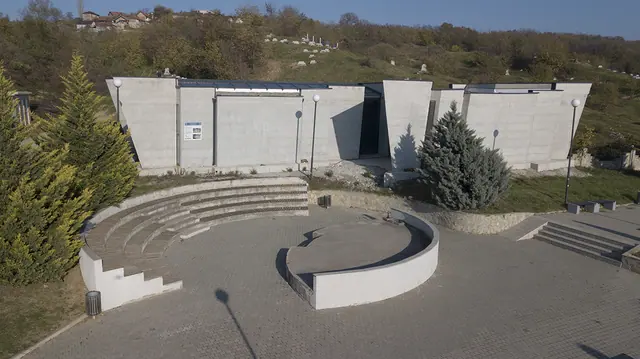
The Museum in the Martyrs' Complex - Krushë e Madhe
Muzeu në kompleksin e dëshmorëve - Krushë e Madhe
The Museum of the Massacre in Krushë e Madhe is financed by the Municipality of Rahovec, together with the…

The Agrofesta Festival - Krushë e Madhe
Festivali Agrofesta - Krushë e Madhe
It is a festival that aims to promote agricultural products and is held in Krushë e Madhe. At this festival…
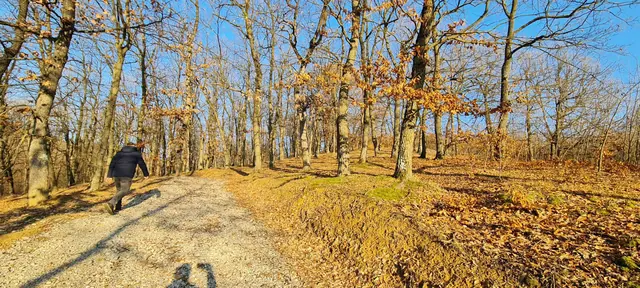
The Walking Trail in Krushë e Madhe
Shtegu i ecjes në Krushë të Madhe
The walking trail in Krushë e Madhe, built by the Municipality of Rahovec in 2019. It extends about 1700 m…